 EasySoftGroup

ADLC: ship with AI agents
ADLC is our Claude Code plugin for the Agentic Development Life Cycle. It keeps requirements, architecture and decisions in a living wiki, and works your backlog story by story: build, test, review and verify, before anything ships.
- stories delivered on our own products
- 272
- test cases written from the stories
- 322
- human gates in every epic
- 2
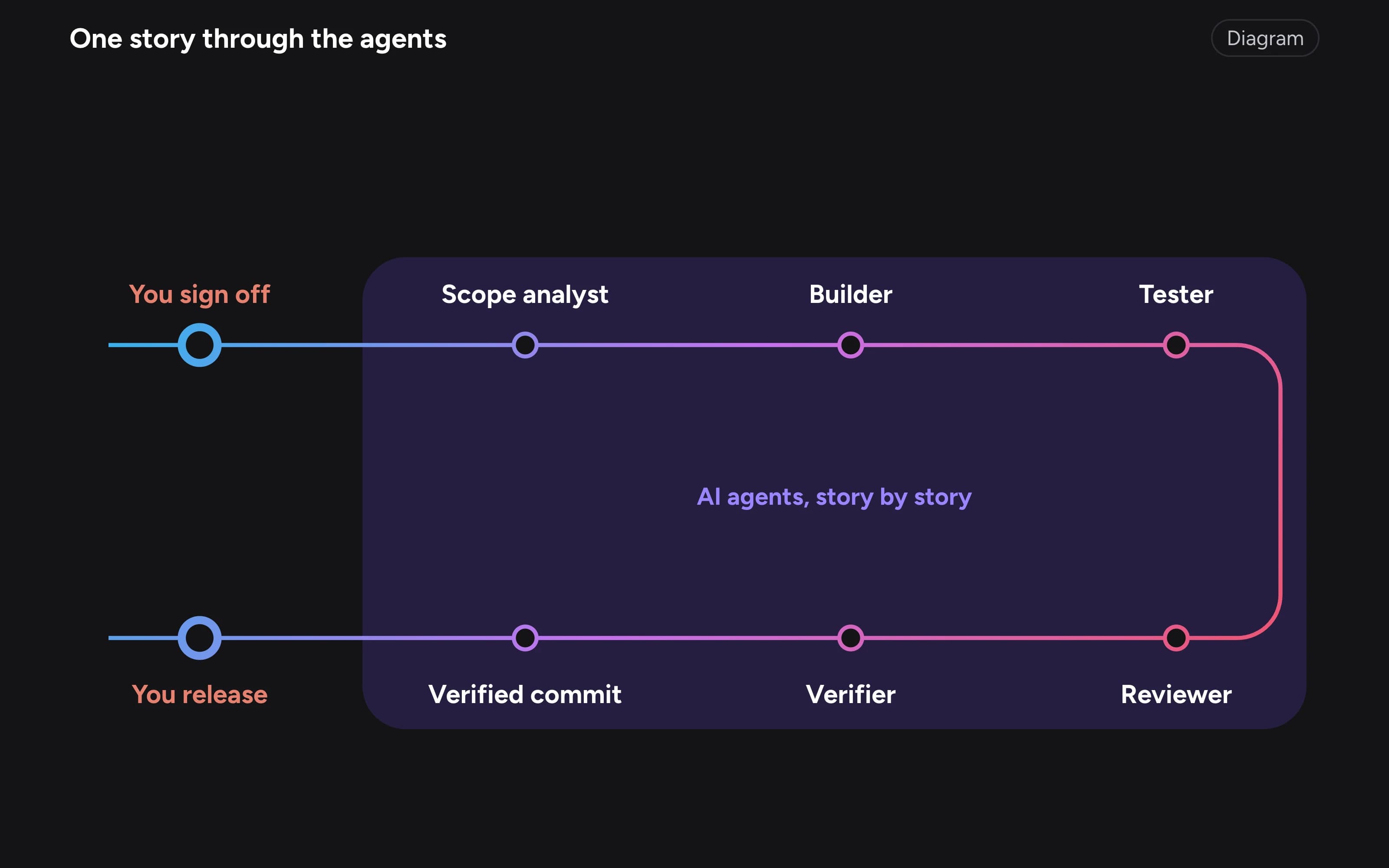
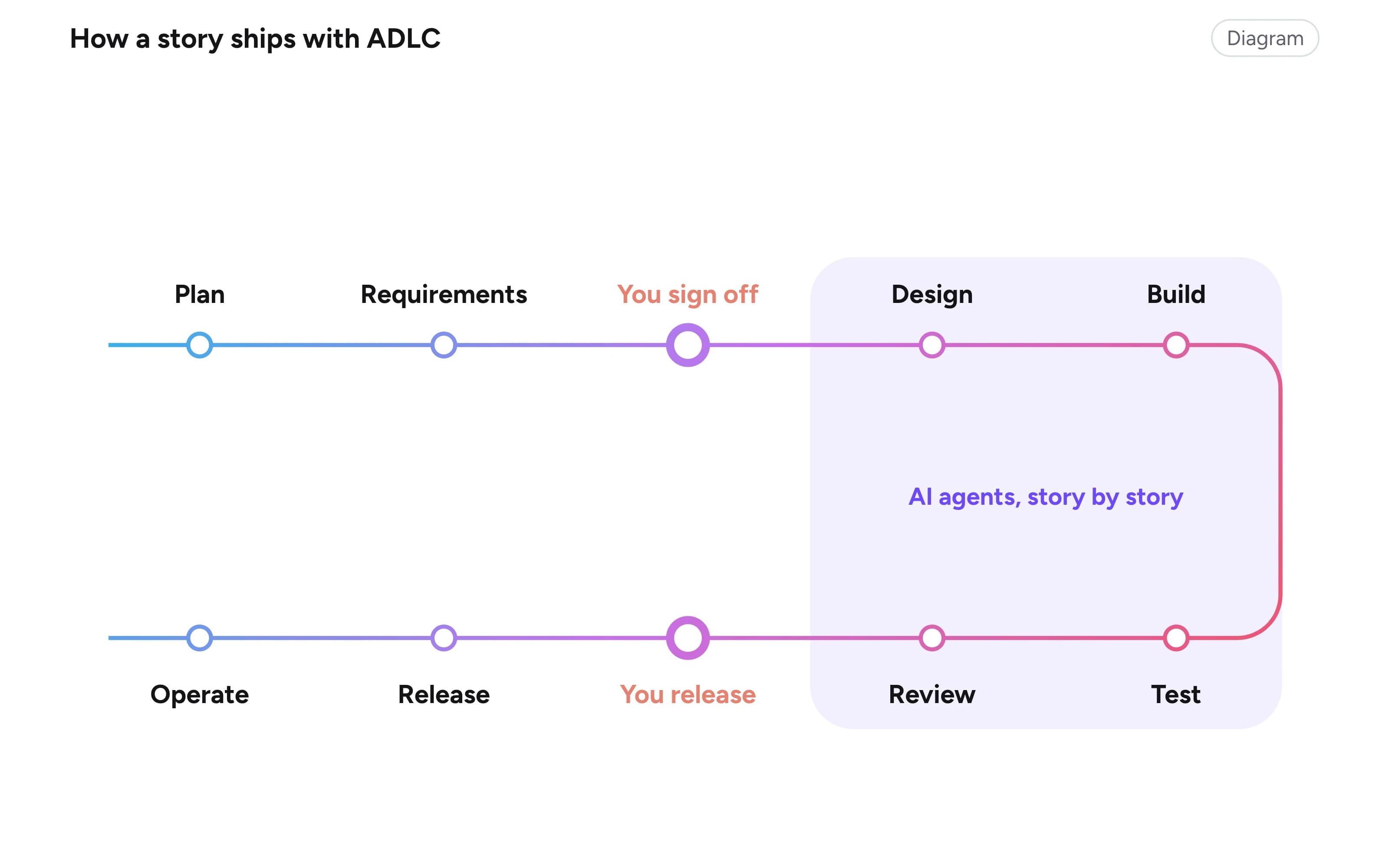
Every phase of delivery, with an agent doing the groundwork
ADLC follows the software development life cycle you already know. In each phase it drafts the work, and your people review, decide and sign off.
Plan
Intake and product governance
A short intake note becomes a scoped need. Gate 0 checks tool approvals and the buy-versus-build cost before work starts.
- Product owner
Requirements
Business analysis
Requirements, user stories with Gherkin acceptance criteria, process models and gap registers, each with a stable ID.
- Business analyst
You decide
Human gate: grilling session. Your product owner settles every open question before anything is built.
Design
Architecture gates
A domain model, ADRs and an engineering workflow for each service. Each repository is profiled, so new code follows its conventions.
- Solution architect
Build
Scoped, then built
A scope census measures the change across the codebase, then a builder agent implements the story to its spec.
- Developer
Test
Tests from acceptance criteria
Test cases come from the stories, and end-to-end specs from each feature's verification contract.
- QA engineer
Review
Independent review and verification
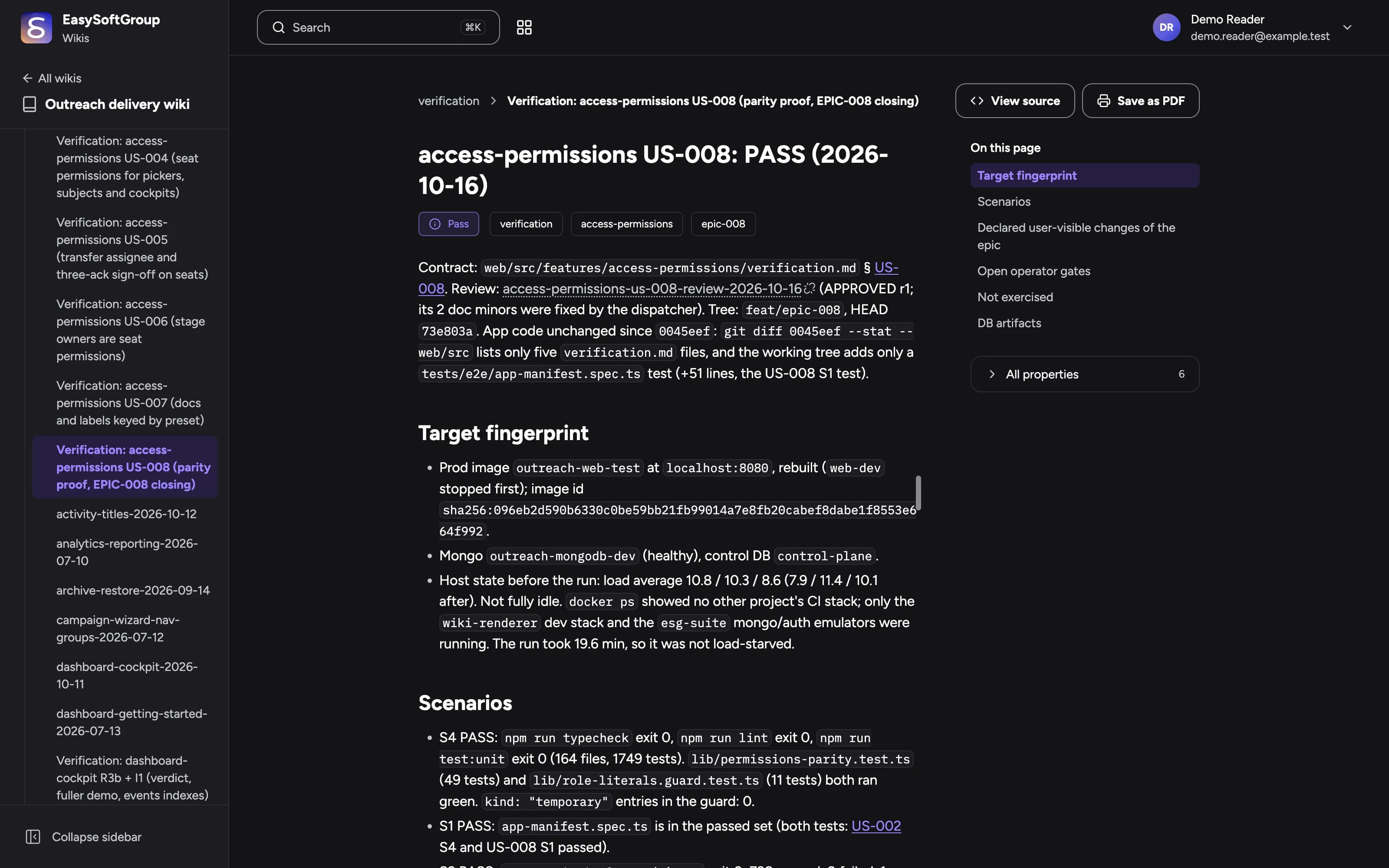
A reviewer agent checks the diff, and a verifier runs the contract end to end and writes a pass or fail record.
- Tech lead
- QA engineer
You decide
Human gate: release on your word. Nothing is pushed or deployed automatically.
Release
Deploy and check
On your go-ahead, the branch is pushed, the pull request opened, and the deployed revision checked.
- DevOps
Operate
Docs and memory
User guides written from the code, as-built pages, and a wiki that carries the context into the next sprint.
- Support
- Whole team
Everything lands in the wiki
Requirements, decisions, plans and evidence live in an Obsidian wiki next to your code, so every agent and every person starts with the context. Each item keeps a stable ID, and exports to Word, Excel, Jira or ClickUp.
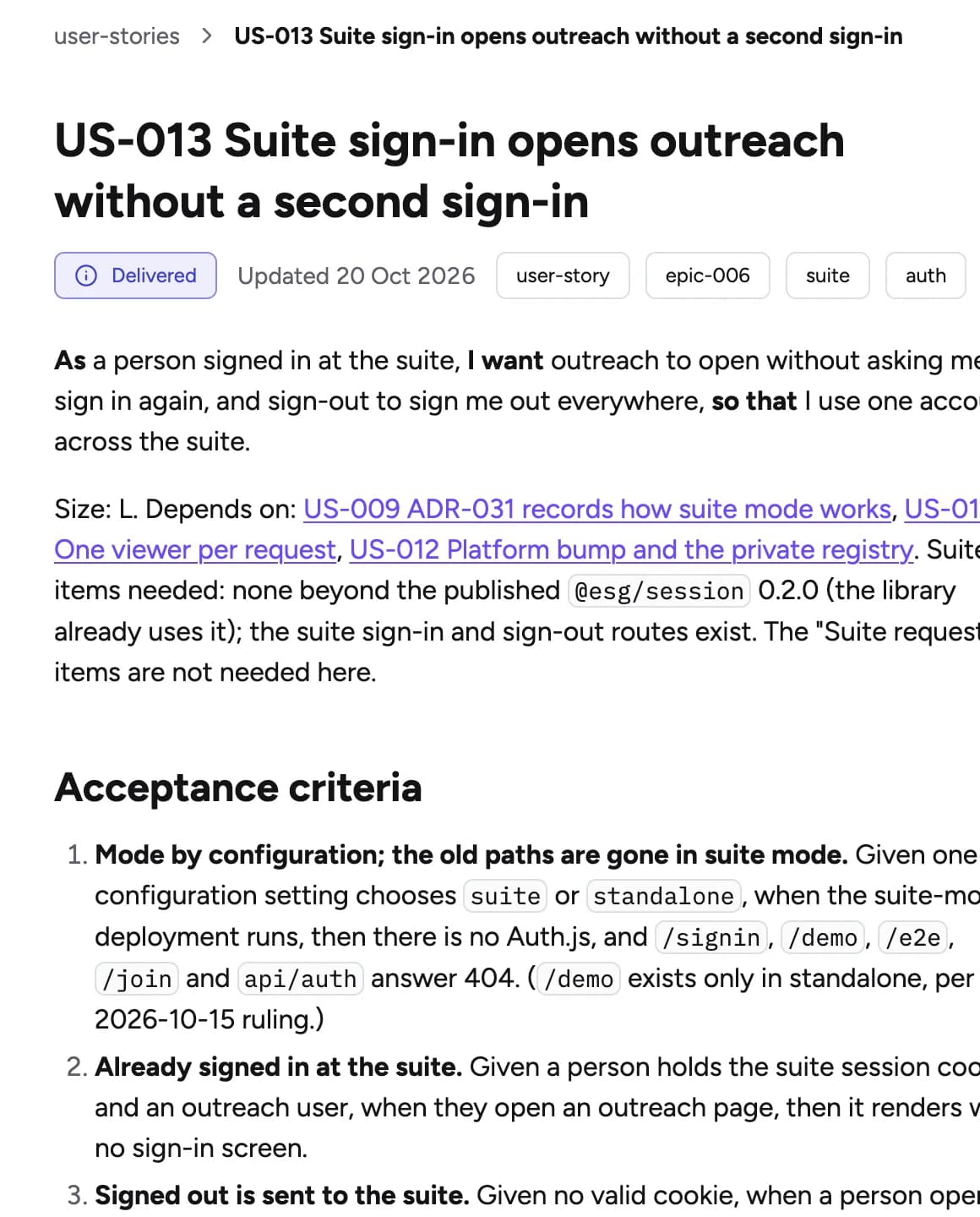
User stories
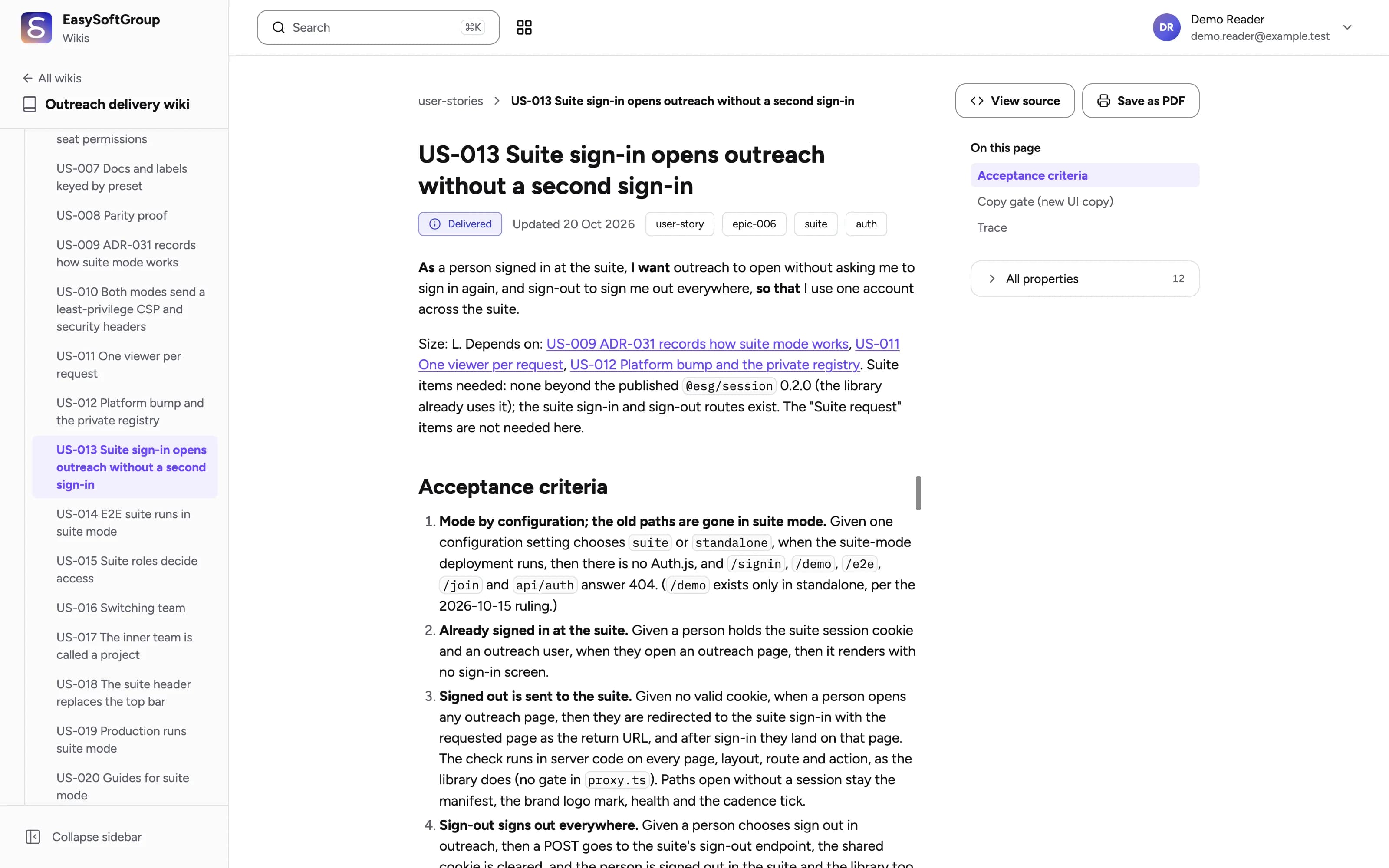
Each story with Gherkin-style acceptance criteria, its dependencies and its status, traced to the commit that delivered it.
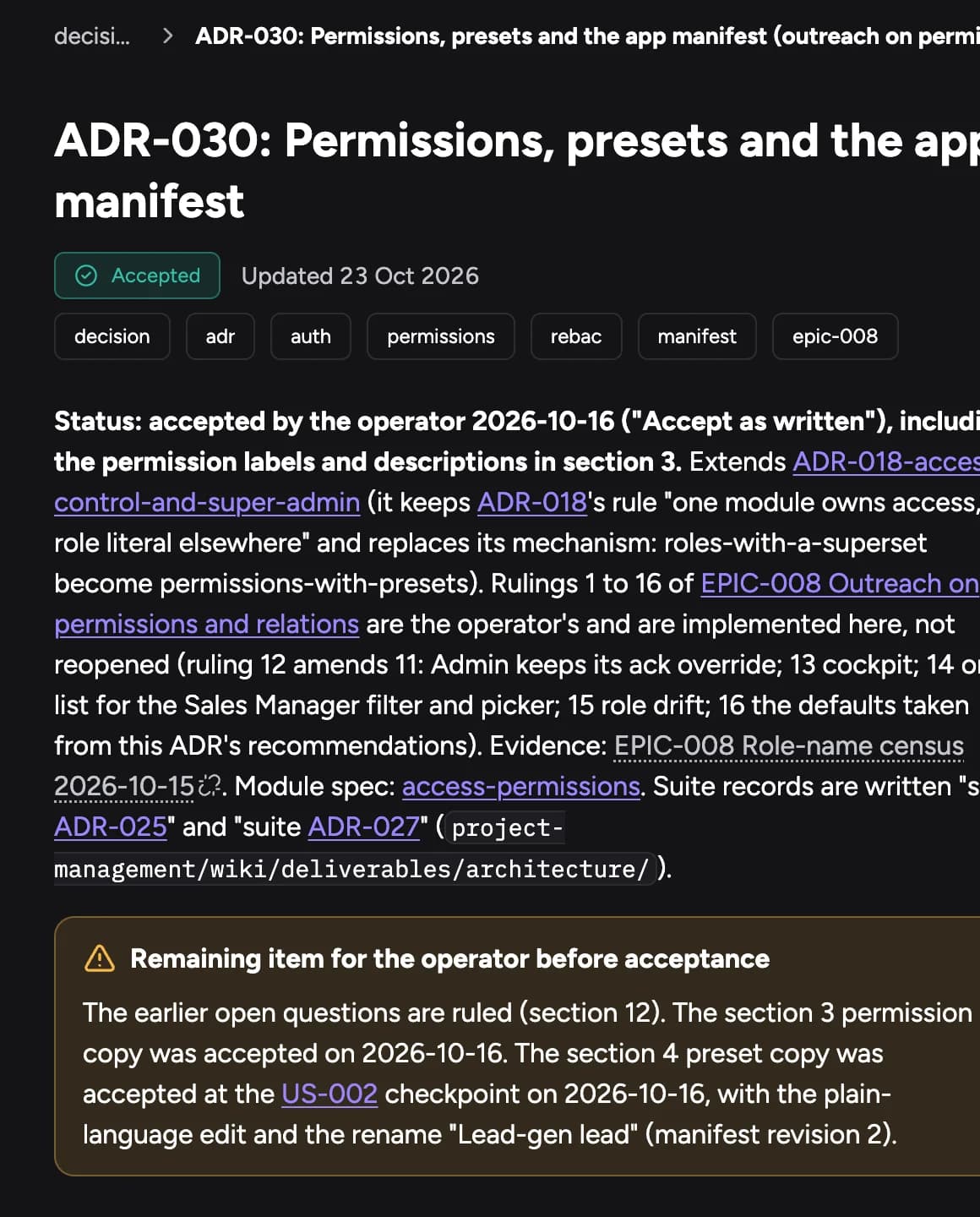
Architecture decisions
Domain models and ADRs written before the build starts, with the product owner's rulings on record.
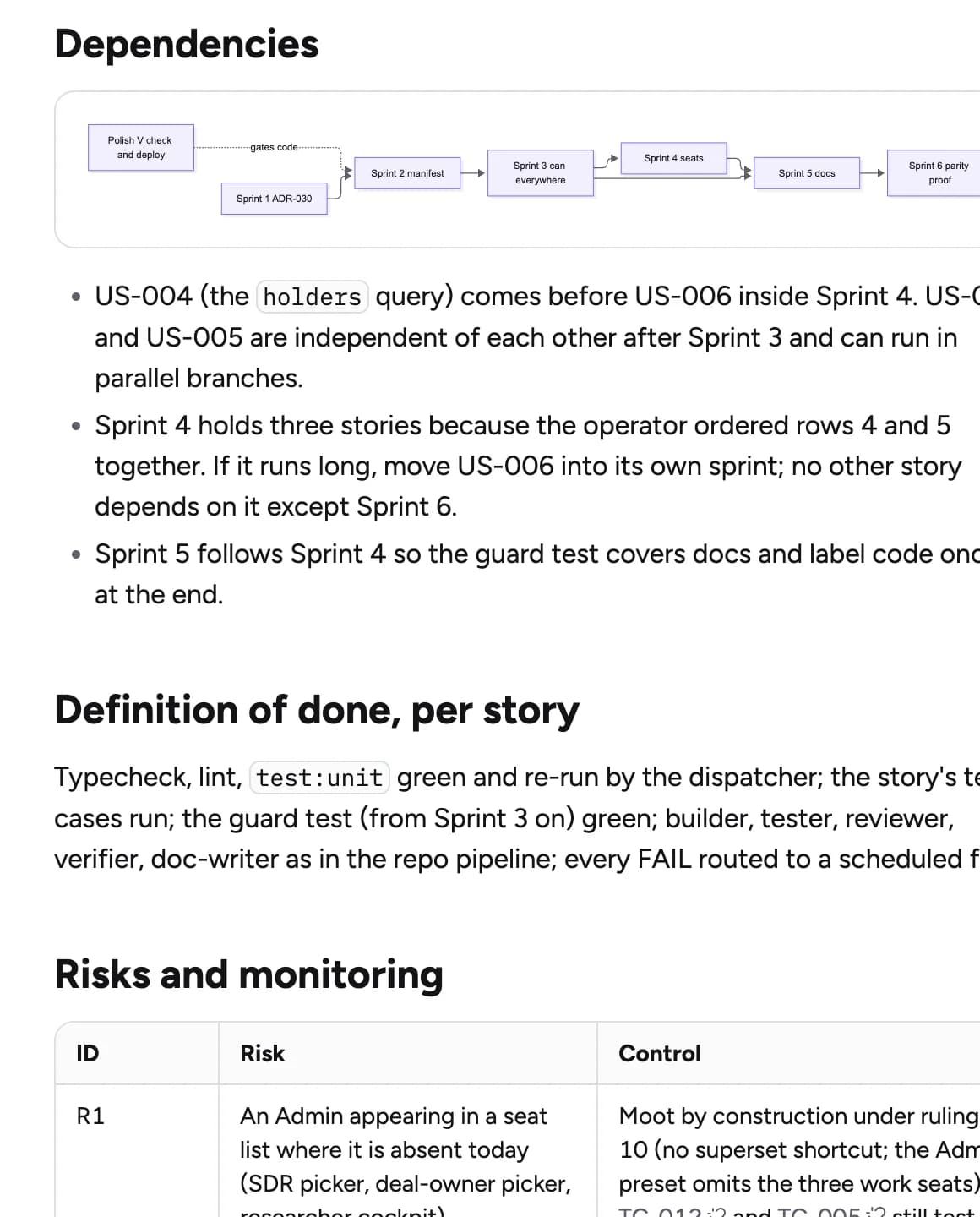
Sprint plans
The order of the stories, what each one depends on, the definition of done and the risks to watch.
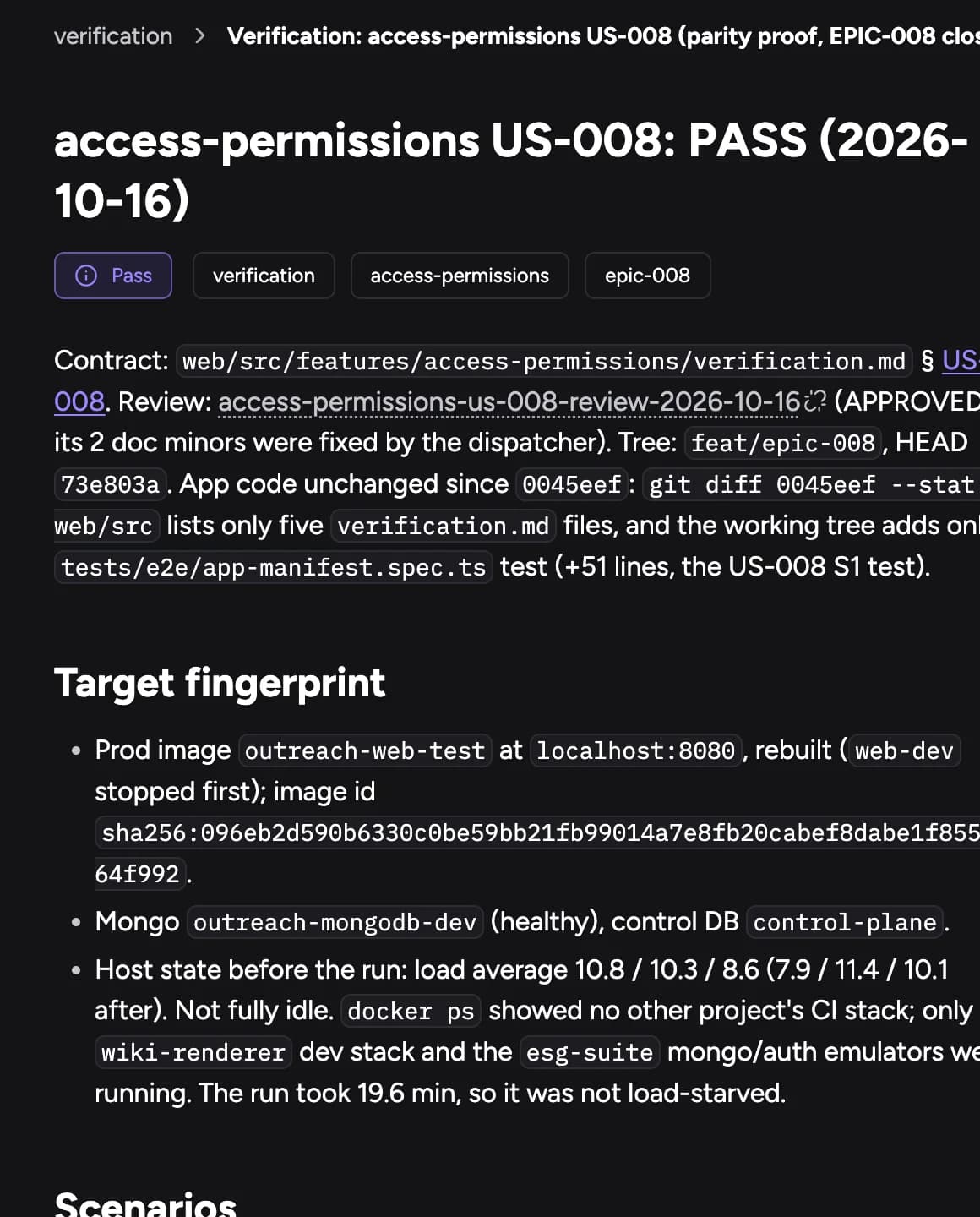
Verification records
A story is done only when its checks pass: lint, types, unit tests and a pass or fail record of the run.
What changes for each role
Product owner
Brings a need in a few sentences and spends their time on decisions: the grilling session, the scope and the go-ahead to release.
Business analyst
Starts from drafted requirements, stories and test cases with traceability, and refines them instead of writing from scratch. Exports to Word, Excel, Jira or ClickUp.
Solution architect
Gets domain models and ADRs drafted from the requirements, and a code graph that answers what calls what.
Developer
Works with agents that build to the spec and to the repository's own conventions, with review findings tied to the diff.
QA engineer
Receives test cases from the acceptance criteria, end-to-end specs, and a pass or fail record for every feature.
Delivery lead
Sees every story's status on one board, with a trace from story to commit and a run ledger that resumes where it stopped.
For teams that want AI speed without losing control
Product companies
Add AI-driven delivery to your team and keep full control of scope.
Teams with existing code
ADLC profiles each repository first, so new code follows the conventions you already have.
Projects delivered by us
We deliver your project with ADLC and hand over the code, the wiki and the trace from story to commit.
Frequently asked questions
Do we need Claude Code?
Yes, to run ADLC yourself. If we deliver the project for you, your team only needs git.
Who decides what gets built?
Your product owner. Every epic starts with a grilling session, and nothing is pushed or deployed without your word.
Does it work with our existing repositories?
Yes. ADLC profiles each repository and records its build, test and lint commands and its conventions before it writes any code.
What do we get at the end?
Working code, plus a wiki of requirements, decisions, test cases and verification records that trace every commit back to its story.
Deliver your next feature with ADLC
Tell us about your product and team. We'll show you how ADLC would run your backlog.